


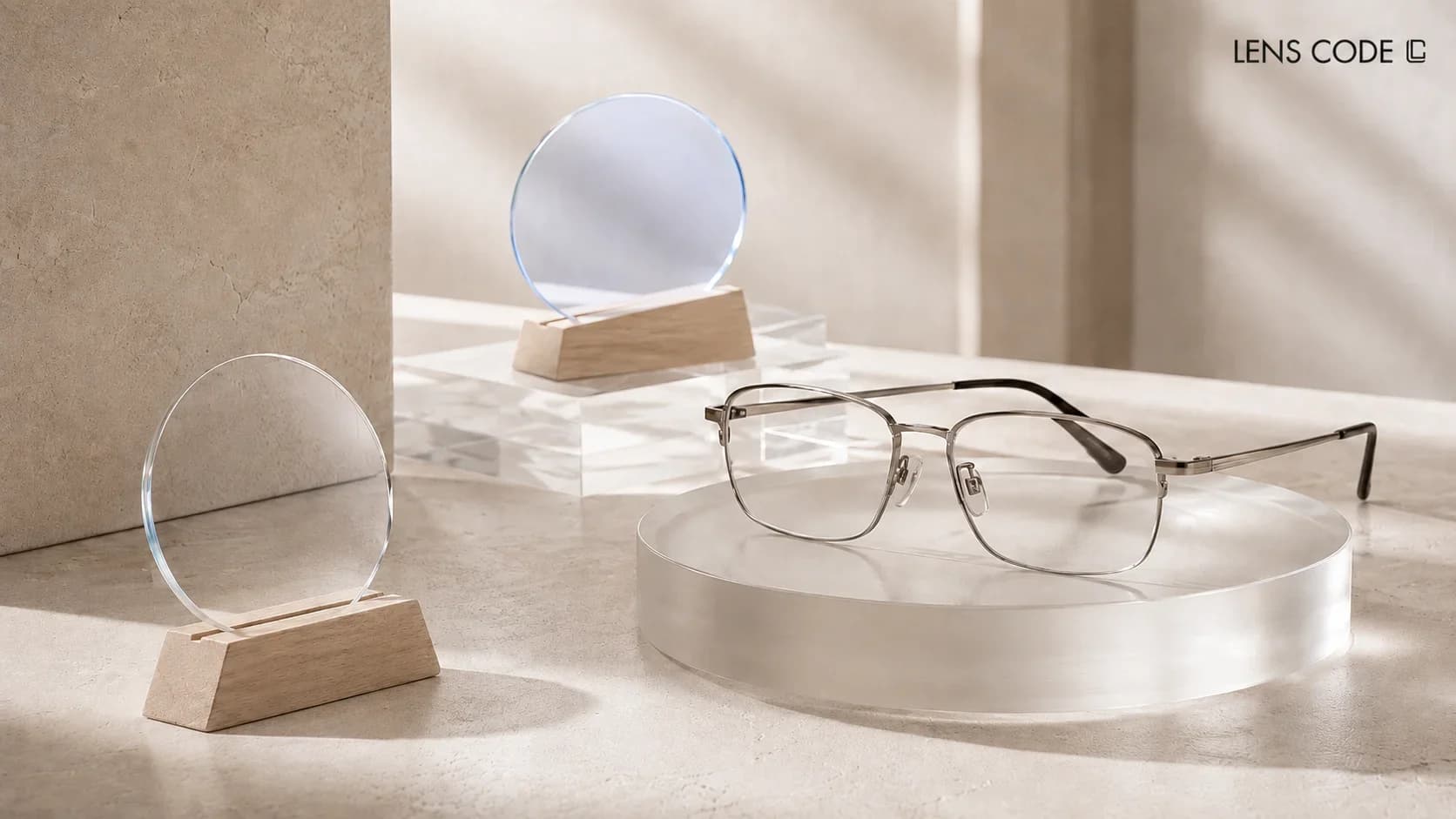
Blue Light Glasses: Do You Need Them? Blue-Light Filtering vs Anti-Reflective Lenses
If you are ordering prescription glasses and see Blue Cut beside Anti-Reflection, do not treat them as two names for the same feature. Anti-reflective treatment is primarily about reflections at the lens surfaces. Blue-light filtering is about reducing selected short-wavelength visible light. The harder question is whether paying for that extra filtering will improve your screen comfort, and that is where the clinical evidence matters.
Start with the correct prescription and a suitable frame from LensCode Eyeglasses , then decide which lens features actually match what you want from the finished pair.
Quick answer
Blue-light filtering lenses and anti-reflective lenses perform different optical jobs. Current clinical evidence has not established a meaningful short-term advantage for blue-light filtering spectacle lenses in reducing computer-related eye strain compared with non-blue-light-filtering lenses. That does not make Blue Cut a meaningless product feature; it means the filtering function should not be confused with a proven treatment for digital eye strain.
LensCode currently states in its lens FAQ that prescription lenses include basic anti-reflective treatment and that Blue Cut is available as an upgrade.
What are blue light glasses?
Blue light glasses use lenses designed to reduce transmission of selected short-wavelength visible light. You may also see the terms blue-light filtering lenses, blue light lenses or Blue Cut.
The name alone does not tell you how much light is filtered or which wavelengths are affected. Different lens products can use different technologies and provide different spectral performance. There is no universal percentage that can be applied to every lens sold as “Blue Cut”.
It is also useful to separate the lens from the frame. A frame in the prescription eyeglasses collection is not itself a “blue light frame”. The filtering feature belongs to the lens configuration fitted to it.
Blue-light filtering vs anti-reflective lenses: what is the difference?
| Factor | Anti-Reflective | Blue Cut / Blue-Light Filtering |
|---|---|---|
| Primary function | Reduce reflections from lens surfaces. | Reduce transmission of selected blue wavelengths. |
| Main optical target | Surface reflections. | Selected parts of the visible-light spectrum. |
| Does AR imply blue filtering? | No. The AR label alone does not establish blue-light filtration. | Filtering should be confirmed from the lens specification. |
| Does it treat digital eye strain? | Do not treat AR itself as a medical treatment. | A proven clinical reduction in short-term digital eye strain has not been established. |
LensCode's current prescription-lens information also separates the two: basic Anti-Reflection is included, while Blue Cut is described as an upgrade.
Do blue light glasses reduce digital eye strain?
Current high-quality evidence does not show a clear short-term reduction in computer-related eye strain from blue-light filtering spectacles compared with non-filtering lenses.
The main Cochrane review examined 17 randomized trials involving 619 participants. Its findings suggest blue-light filtering lenses may make little or no difference to short-term visual fatigue associated with computer use.
There are limitations: many studies were small, follow-up was often short, and lens technologies varied. So the responsible conclusion is not “nobody can notice a difference”. It is that a clinically meaningful eye-strain benefit has not been clearly demonstrated.
What actually contributes to digital eye strain?
Screen discomfort is not explained by blue light alone. Long periods of near focus, reduced or incomplete blinking, dry-eye symptoms, glare, unsuitable viewing conditions and an uncorrected or inappropriate prescription can all contribute.
Before treating Blue Cut as the fix, check the basics
- ✓ Look away from close work regularly.
- ✓ Blink normally and pay attention to persistent dryness.
- ✓ Keep the screen at a comfortable working distance.
- ✓ Reduce unwanted reflections and harsh lighting around the display.
- ✓ Make sure the prescription you use for work is appropriate.
If you are replacing an older pair, review the prescription before customising new lenses. LensCode also explains prescription accuracy and custom-lens requirements in its current optical-order terms .
Once the prescription is settled, you can return to current prescription frames and treat coating choices as a separate step.
Does screen blue light damage your retina?
Current clinical evidence does not establish that ordinary computer or phone use causes retinal damage that blue-light glasses prevent.
Laboratory research can produce retinal effects at sufficiently intense exposures, but that is not the same as normal viewing from a phone or monitor. More recent ophthalmology reviews report that typical screen exposure is below levels associated with photochemical retinal damage in experimental models.
Cochrane also could not establish macular protection from blue-light filtering spectacles. So “filters some blue light” is a product function; “protects your retina from your computer” is a separate clinical claim that has not been demonstrated.
Do blue light glasses improve sleep?
Light exposure in the evening can affect circadian timing. That does not automatically prove that wearing blue-light filtering spectacles improves sleep.
Trials included in the major review produced inconsistent sleep findings, so the effect of these lenses on sleep quality remains uncertain. Buying Blue Cut specifically for a guaranteed sleep benefit would therefore go beyond the evidence.
Does a blue reflection mean a lens blocks blue light?
No. A blue reflection by itself does not tell you how much blue light a lens filters.
Anti-reflective coatings can have green, blue or other residual reflection colours. Some modern AR coatings that are not defined solely by blue-light filtering can still show a subtle blue reflex.
The opposite is also possible: blue-light filtering technology can be incorporated into lens material rather than identified by an obvious surface reflection. Do not use lens colour, a phone torch or a homemade test to estimate filtration performance. Use the actual product specification.
What does anti-reflective coating actually do?
Anti-reflective treatment is designed to reduce light reflected from the front and back surfaces of a spectacle lens. Reducing those reflections allows more of the available light to transmit through the lens and makes reflections less visible.
That is a real optical function, but it should not be rewritten as a medical promise that AR alone prevents headaches or treats digital eye strain.
LensCode currently states that its prescription lenses include a basic anti-reflective layer. You can confirm the current wording in the LensCode FAQ before finalising a lens configuration.
When might you still choose Blue Cut?
You might still choose it because you specifically want a lens with a blue-light filtering feature and you understand the limits of the clinical evidence.
Before paying for the upgrade, look for the actual specification: filtering range, filtration amount, implementation and any visible tint or reflection if those details are provided. Different products should not be assumed to perform identically.
LensCode's public Blue Cut information currently confirms the upgrade exists, but does not publish a percentage, wavelength band or lens manufacturer. Those details should remain unspecified unless the selected lens configuration provides them.
Blue Cut, anti-reflective or both?
| Your priority | What to review |
|---|---|
| Reduce lens-surface reflections | Review the anti-reflective treatment. |
| Specifically want blue-light filtration | Review the actual Blue Cut specification. |
| Want both functions | Confirm how the selected LensCode lens configuration combines the options. |
| Trying to solve screen discomfort | Check prescription, blinking, dryness, glare, working distance and breaks rather than relying on Blue Cut alone. |
Choose the frame first, then inspect the lens options
Keep the frame decision separate from the evidence and specifications behind the lens upgrade.
Browse Prescription EyeglassesWhat does LensCode currently offer?
LensCode's current English FAQ states that prescription lenses include a basic anti-reflective and scratch-resistant coating. Blue Cut is presented separately as an optional upgrade in the lens-selection wizard.
The public information does not currently identify an exact Blue Cut manufacturer, filtration percentage, wavelength range, coating chemistry or tint. Those details should not be filled in by assumption.
The current PDPs for NOVA , Rival and Eilen all include a Choose Lens step. They are frame examples in the buying journey, not ready-made “blue light glasses” by definition.
Before submitting custom prescription lenses, it is also worth reviewing LensCode's prescription and custom-lens terms .
Does the frame matter for blue-light filtering?
Not in the way the filtering itself works. Blue Cut is primarily a lens decision, while the frame should be chosen for fit, construction, measurements and the prescription-lens configuration you need.
You can compare different styles in YUVA Eyeglasses or browse the broader LensCode Eyeglasses collection .
If material or frame construction becomes part of the decision, use the LensCode frame-material guide rather than trying to infer anything about Blue Cut from the frame itself.
Five checks before paying for a Blue Cut upgrade
- Prescription: make sure the correction you are ordering is appropriate and current.
- Blue Cut function: confirm that you want blue-light filtration rather than assuming it is a treatment for screen strain.
- Existing AR: understand what anti-reflective treatment is already included.
- Published specification: check filtration details if they are supplied for the selected lens.
- Expectation: do not buy the upgrade on the assumption that it is proven to prevent headaches, retinal damage, myopia or sleep problems.
Check the current lens options and custom-lens terms before returning to prescription frames for your final selection.
Choose the lens for what it actually does
Then pair it with a frame that fits your prescription, measurements and everyday use.
Explore LensCode Eyeglasses
Choose the lens for what it actually does
Then pair it with a frame that fits your prescription, measurements and everyday use.
Explore LensCode EyeglassesFrequently Asked Questions
What do blue light glasses do?
They use lenses designed to reduce transmission of selected blue wavelengths. The amount and range filtered depend on the actual lens product.
Do blue light glasses help digital eye strain?
Current randomized-trial evidence has not demonstrated a clear meaningful short-term benefit over non-blue-light-filtering spectacle lenses for computer-related eye strain.
What is the difference between Blue Cut and anti-reflective lenses?
Anti-reflective treatment primarily reduces lens-surface reflections. Blue Cut is intended to reduce transmission of selected blue wavelengths. LensCode describes both separately in its lens FAQ .
Can blue light from ordinary screens damage your eyes?
Current clinical evidence does not establish retinal damage from ordinary computer or phone screen exposure under typical viewing conditions.
Do blue light glasses help you sleep?
Evidence for improved sleep outcomes from blue-light filtering spectacle lenses remains uncertain and inconsistent.
Can prescription glasses have Blue Cut?
LensCode currently lists Blue Cut as an upgrade for its prescription lenses. Start with a frame from LensCode Eyeglasses and review the available lens configuration before ordering.
Did you find this article helpful?
Share it with your friends or family interested in optical care.
فريق LensCodeVerified
A team specialized in optical sciences and eye care, dedicated to providing the latest information and advice to help you choose the perfect glasses and contact lenses.