


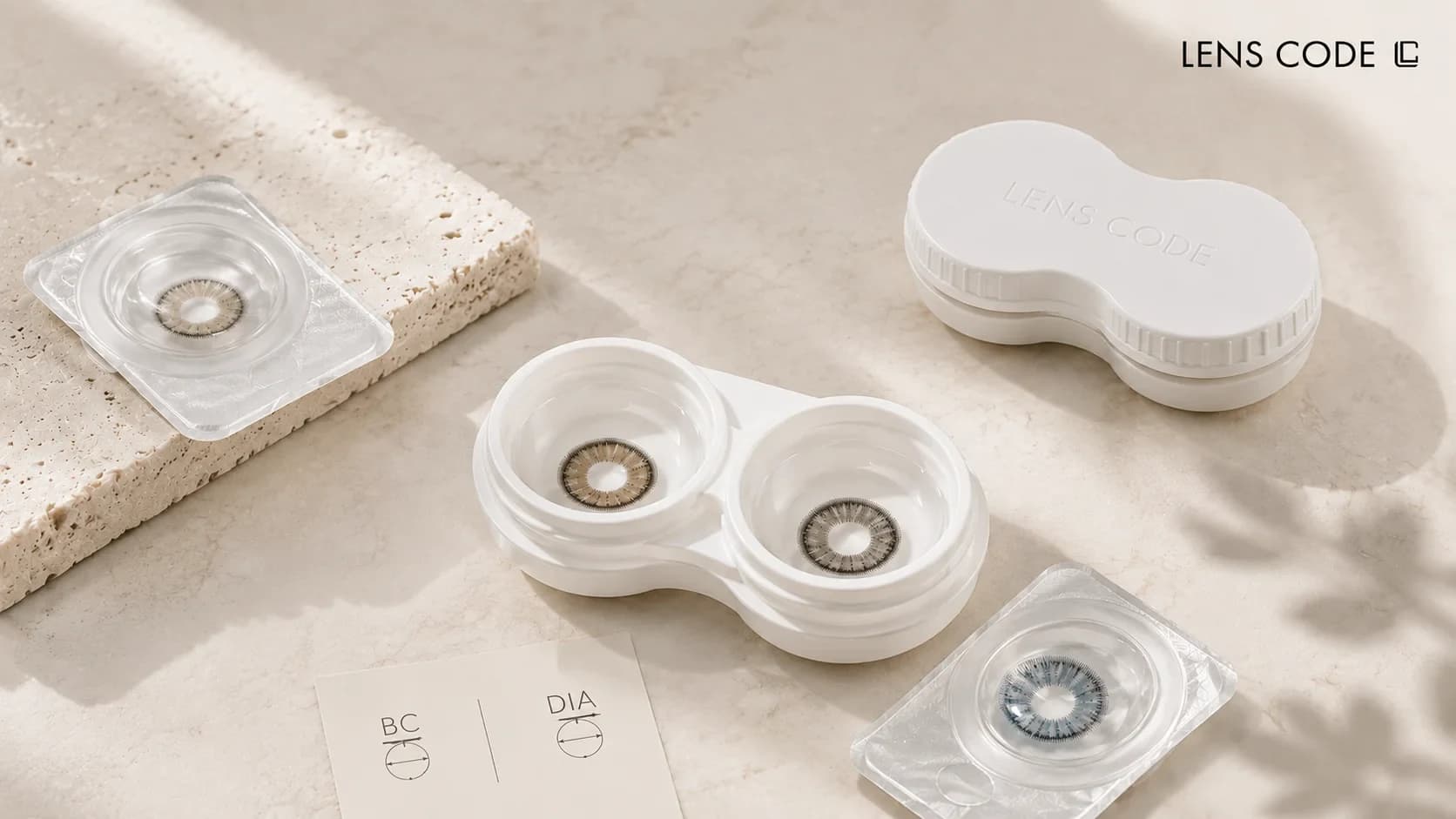
Colored Contact Lenses: How to Choose the Right Color, Fit and Wear Schedule
Choosing colored contact lenses is partly about appearance, but color is only the first filter. A good buying decision also accounts for whether you need vision correction, the lens's BC and DIA, its replacement schedule, pack format and care requirements.
Quick answer
Decide how subtle or noticeable you want the color change to be. Then confirm whether you need vision correction and compare BC, DIA, replacement schedule, pack size and care instructions before ordering.
How do you choose colored contact lenses?
Use five questions: What look do I want? → Do I need vision correction? → What BC and DIA do I use? → What replacement schedule suits the product? → How is the lens cared for?
This separates a style preference from fitting and safety requirements. A color can be exactly what you want visually and still be the wrong product if its parameters do not match the contact lens you have been fitted for.
Start with the LensCode Colored Contact Lenses collection when you want to compare shades and replacement schedules. For a wider selection, use the Contact Lenses collection .
Natural-looking or noticeable: what result do you want?
The first decision is aesthetic. Decide whether you want a relatively subtle change or a color that is more noticeable.
A subtle result
Look for a color family and lens pattern that works visually with your existing iris rather than choosing by shade name alone.
A more noticeable change
Compare shades with a stronger visual contrast to your natural eye color, while also looking at the lens's printed color pattern.
The same colored lens will not necessarily look identical on every wearer. Natural iris color, lens design and lighting all influence the final appearance.
How should you choose a contact-lens color?
Think in color directions rather than rigid complexion rules. Choose the visual family you prefer, then compare the products within it.
If you prefer warmer tones
Espresso, brown, honey and sand-inspired shades are useful starting points.
Amara - Espresso is a monthly option with BC 8.70 mm, DIA 14.50 mm and a two-lens pack, with both prescription and cosmetic selection paths.
DIVA - Clay takes a warm golden-sand direction and comes with BC 8.60 mm, DIA 14.50 mm and two lenses per pack.
Another warm option is LensMe - Muse , a monthly lens with BC 8.60 mm and DIA 14.20 mm.
If you prefer cooler tones
Gray, sapphire and blue-toned shades provide a cooler visual direction.
Amara - Gray is a daily option with BC 8.70 mm, DIA 14.20 mm and 10 lenses per pack.
For a blue direction, FreshLook - True Sapphire is a monthly option with BC 8.60 mm, DIA 14.50 mm and two lenses per box.
You can also explore the wider Amara collection , FreshLook collection and LensMe collection .
Start with the color, then check the specifications
Compare current shades, prescription options, BC, DIA and replacement schedules before ordering.
Browse Colored Contact LensesPrescription colored contacts vs cosmetic colored contacts
Prescription colored contacts combine a color effect with vision correction. Cosmetic colored contacts change appearance without corrective power.
Products such as Amara Espresso, Amara Gray, DIVA Clay, LensMe Muse and FreshLook True Sapphire provide both prescription and non-corrective selection options.
If you require vision correction, do not choose contact-lens power by copying an old glasses prescription or guessing from another lens brand. Use the contact-lens prescription and fitting information appropriate for your eyes.
For ordering and prescription questions, you can also use the LensCode FAQ .
What do BC and DIA mean?
BC and DIA are fitting-related lens specifications, not color settings.
BC — Base Curve
Base Curve describes the specified curvature of the contact lens and is expressed in millimetres.
DIA — Diameter
Diameter describes the overall diameter of the lens and is also expressed in millimetres.
Current examples show why these numbers should be checked product by product: Amara Espresso uses BC 8.70 mm / DIA 14.50 mm, Amara Gray uses BC 8.70 mm / DIA 14.20 mm, and FreshLook Purehazel uses BC 8.60 mm / DIA 13.80 mm.
These values describe the products; they are not recommendations for your eyes. Do not assume that a familiar BC or DIA is interchangeable between brands.
The FDA contact-lens prescription guide includes Base Curve and Diameter among contact-lens prescription parameters where applicable.
Daily vs monthly colored contacts
The practical difference is the replacement schedule. Daily disposable lenses are used for the day and discarded, while monthly lenses are reused within their specified replacement cycle.
| Schedule | How it works | What to check |
|---|---|---|
| Daily | A fresh lens is used for that day and then discarded. | Pack size, BC/DIA, prescription option and wear instructions. |
| Monthly | The lens is reused within its stated replacement cycle. | Cleaning, disinfection, storage and wear instructions. |
Daily examples include Amara - Gray and FreshLook - Purehazel , which comes with 30 lenses, BC 8.60 mm and DIA 13.80 mm.
Monthly examples include Amara - Espresso, LensMe - Muse, DIVA - Clay and FreshLook - True Sapphire.
A monthly replacement schedule does not mean continuous wear for a month. The CDC contact-lens types guide explains the difference between wear schedule and replacement schedule.
How to compare colored contact lenses at LensCode
Once you have narrowed the color direction, compare: shade, prescription availability, BC, DIA, replacement schedule, brand and pack size.
| Product | Color direction | Schedule | BC / DIA | Pack |
|---|---|---|---|---|
| Amara Espresso | Warm / Espresso | Monthly | 8.70 / 14.50 mm | 2 lenses |
| Amara Gray | Cool / Gray | Daily | 8.70 / 14.20 mm | 10 lenses |
| FreshLook True Sapphire | Blue / Sapphire | Monthly | 8.60 / 14.50 mm | 2 lenses |
If color is still your main filter, return to the Colored Contact Lenses collection . If you already know the brand you prefer, narrow the search through Amara, FreshLook or LensMe.
Common mistakes when buying colored contacts
Choosing by shade alone
A lens can look right but have different fitting parameters from the product you normally use.
Guessing prescription power, BC or DIA
Use the correct contact-lens fitting information rather than selecting numbers because they appear familiar.
Ignoring the replacement schedule
Daily disposable lenses should not be reused on another day. Reusable lenses need the care routine specified for that product.
Sharing colored lenses
Do not share prescription or cosmetic contact lenses. Saudi users can review SFDA contact-lens guidance for local safety recommendations.
Cleaning or storing lenses in water
Use the appropriate contact-lens solution rather than water. The CDC decorative contact-lens guide also provides safe handling guidance for colored lenses.
When should you stop wearing the lenses?
Remove the lenses and seek professional eye-care advice if you develop unusual redness, eye pain, significant irritation or a change in vision.
Do not continue wearing the lens while trying a different color or cleaning method to see whether the problem disappears.
For Saudi-specific contact-lens safety guidance, review SFDA guidance for contact-lens users .
A 30-second decision framework
Start with the look, then confirm the lens details
Compare current colors, prescription options, BC, DIA and replacement schedules before ordering.
Explore Colored Contact LensesFrequently Asked Questions
How do I choose colored contact lenses?
Choose the visual effect first, then check prescription requirements, BC, DIA, replacement schedule and care instructions.
Can colored contacts have a prescription?
Yes. Colored contacts can be available with corrective power or without vision correction. Use the appropriate contact-lens prescription and fitting information.
What does BC mean on contact lenses?
BC means Base Curve, the specified curvature of the contact lens.
What does DIA mean?
DIA means Diameter, the overall diameter of the contact lens in millimetres.
Are daily or monthly colored contacts better?
Neither is universally better. Daily lenses are discarded after use, while monthly lenses are reusable within their specified replacement schedule and require appropriate care.
Can I rinse contact lenses with water?
No. Use the appropriate contact-lens solution for cleaning and storage and follow the lens care instructions.
Did you find this article helpful?
Share it with your friends or family interested in optical care.
فريق LensCodeVerified
A team specialized in optical sciences and eye care, dedicated to providing the latest information and advice to help you choose the perfect glasses and contact lenses.