


Men's Sunglasses... How to Choose the Right Fit, Frame Shape and Everyday Style
Open a large sunglasses collection and it is easy to start comparing colours first. A better shortlist starts with where you will wear the sunglasses, then moves to measurements, frame shape and the actual lens specifications. That usually turns dozens of men's sunglasses into two or three frames worth comparing properly.
A useful order for choosing
Work through the decision as use → measurements → frame shape → lens specification → product details. The Men's or Unisex label is useful for filtering, but it does not replace checking the actual frame dimensions.
How do you choose men's sunglasses without overthinking the options?
Start with the job the sunglasses need to do most often. If they are mainly for everyday wear, fit and an easy-to-wear frame shape may remove more unsuitable options than colour will. If much of your time is spent driving, stable fit and the lens specifications deserve more attention.
You can narrow the current LensCode range through the Men's Sunglasses collection , or use the full Sunglasses collection when you also want to consider Unisex frames.
Start with where you will actually wear them
Everyday wear
Look for measurements close to a frame you already wear comfortably, then check the stated UV protection and the frame shape. A pair you have to keep pushing back into position is unlikely to become more useful because you prefer its colour.
Driving and commuting
A secure fit matters here because repeated adjustment is inconvenient behind the wheel. If reflected glare is a regular concern, check whether the specific product is actually described as Polarized. Do not infer polarization from a dark tint.
Outdoor use and travel
Check UV protection, frame stability and the measurements that determine how the glasses sit on your face. Keep sports protection as a separate buying decision unless a product is specifically made and certified for that purpose.
If you want to browse the brand range before narrowing the shape, the YUVA collection gives you another route into the current frame selection.
How should sunglasses fit?
Three measurements are the quickest place to start: Lens Width, Bridge Width and Temple Length.
Lens Width
The horizontal width of one lens. It helps you compare the overall scale of different frames.
Bridge Width
The measurement across the bridge, which affects how the frame sits at the nose.
Temple Length
The length of the arm from the hinge towards the area behind the ear.
If you already own sunglasses that fit well, compare their numbers with the new frame. LensCode's glasses size guide explains how to read the three measurements without turning this buying decision into guesswork.
Aviator, square, round or geometric?
Think of frame shape as visual direction rather than a fixed rule based on gender or face shape.
Aviator: a recognisable classic profile, usually with a more open lens shape and prominent bridge design.
Square: straighter lines and a more structured visual presence.
Round: a softer outline with less angular framing around the lenses.
Geometric: a more distinctive outline for shoppers who want something outside the usual round or square shapes.
If face shape is the part you are trying to solve, use the LensCode face-shape guide rather than turning frame shape into a rigid rule here.
Men's vs unisex sunglasses: does the label matter?
It matters as a shopping filter, but it does not tell you the full fit story. A Men's frame and a Unisex frame can still have measurements that are relatively close, while two products inside the same gender category may differ noticeably.
The current LensCode specifications classify FALCON as Men, while PANENKA and REEF are presented as Unisex.
If a Unisex frame has the proportions and shape you want, the label alone is not a reason to remove it from your shortlist. Check the numbers.
What lens information should you check?
- ✓ UV protection: use the protection level stated for the actual product.
- ✓ Lens tint: treat colour and darkness as separate from the documented UV specification.
- ✓ Polarization: count it as a feature only when the product explicitly states it.
- ✓ Product-specific information: do not transfer a lens specification from one frame to another.
FALCON, PANENKA and REEF currently state UV400 on their product pages. Polarization is not listed for those three products in the specifications checked for this comparison.
How do you compare two sunglasses beyond appearance?
If two frames look equally good, measurements and lens information are usually more useful tie-breakers than colour.
| Factor | What to compare |
|---|---|
| Main use | Everyday wear, commuting, driving or travel. |
| Measurements | Lens Width + Bridge Width + Temple Length. |
| Frame shape | Aviator, square, round, geometric or another verified shape. |
| Material | Use it only when the individual product identifies the material clearly. |
| UV specification | Compare the protection stated for each lens. |
| Polarized | Treat it as present only when the product says so. |
| Classification | Men or Unisex, followed by the actual dimensions. |
How to compare men's sunglasses at LensCode
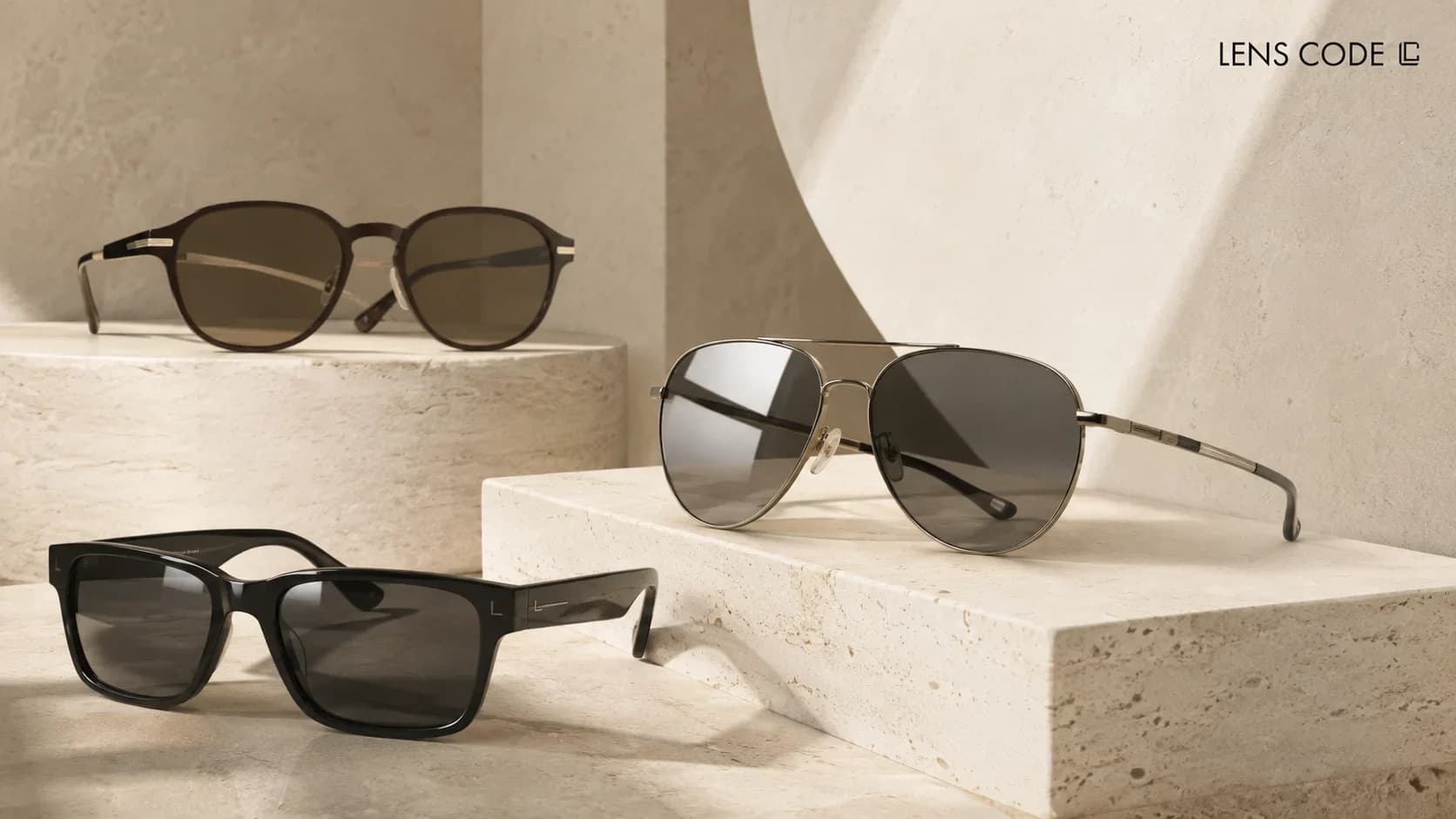
These three current models make the differences easy to see: one aviator, one geometric frame and one square frame.
| Frame | Classification | Shape | Measurements | Material | UV |
|---|---|---|---|---|---|
| FALCON | Men | Aviator | 53-14-140 | Metal | UV400 |
| PANENKA | Unisex | Hexagon / Geometric | 55-17-135 | Not specified | UV400 |
| REEF | Unisex | Square | 54-15-145 | Not specified | UV400 |
PANENKA has the widest lens of the three at 55 mm but the shortest temple at 135 mm. FALCON uses the narrowest bridge at 14 mm and a 140 mm temple. REEF sits between them in lens width at 54 mm and has the longest temple at 145 mm.
Those differences are more useful than ranking the frames from “best” to “worst”. Use them to remove the models that are furthest from the dimensions you are trying to match.
Narrow the collection before you buy
Compare two or three frames by dimensions, shape and lens specification before making the final choice.
Browse Men's SunglassesMen's sunglasses online buying checklist
- ✓ Decide where you will use the sunglasses most often.
- ✓ Check whether the product is classified as Men's or Unisex.
- ✓ Compare Lens Width, Bridge Width and Temple Length.
- ✓ Confirm the frame shape.
- ✓ Use the material only when it is actually stated on the product page.
- ✓ Check the verified UV specification.
- ✓ Do not assume polarization unless it is listed.
- ✓ Confirm the selected colour or variant.
- ✓ Review the current product information before ordering.
- ✓ Check the current return and exchange terms.
LensCode's FAQ covers common ordering and sizing questions, while the Terms & Policies page is the better place to check current return and exchange conditions.
A 30-second men's sunglasses decision
Once you know your use and approximate measurements, you do not need to compare every frame. Shortlist two or three shapes, compare their dimensions and lens specifications, then remove the weaker matches.
Start with fit and use
Then compare frame shape and verified lens information across the models that remain on your shortlist.
Explore LensCode SunglassesFrequently Asked Questions
How do I choose men's sunglasses?
Start with your main use, then compare the lens width, bridge width and temple length. After that, narrow the frame shape and review the lens specifications on the product page.
What sunglass shape is best for men?
There is no single best shape. Aviator, square, round and geometric frames create different visual profiles, while fit still depends on the individual frame measurements.
How should men's sunglasses fit?
Compare lens width, bridge width and temple length with a frame you already wear comfortably. The frame should stay in position without persistent slipping or uncomfortable pressure.
Are unisex sunglasses different from men's sunglasses?
The label is one way to organise a collection, but actual fit still depends on the measurements and proportions of the individual frame.
Are polarized sunglasses better for driving?
Polarization can help reduce reflected glare, but check that the specific product is actually labelled Polarized and review its UV protection separately.
Do dark sunglass lenses provide more UV protection?
Lens darkness alone does not establish the UV protection level. Use the UV specification stated for the product.
Did you find this article helpful?
Share it with your friends or family interested in optical care.
فريق LensCodeVerified
A team specialized in optical sciences and eye care, dedicated to providing the latest information and advice to help you choose the perfect glasses and contact lenses.