


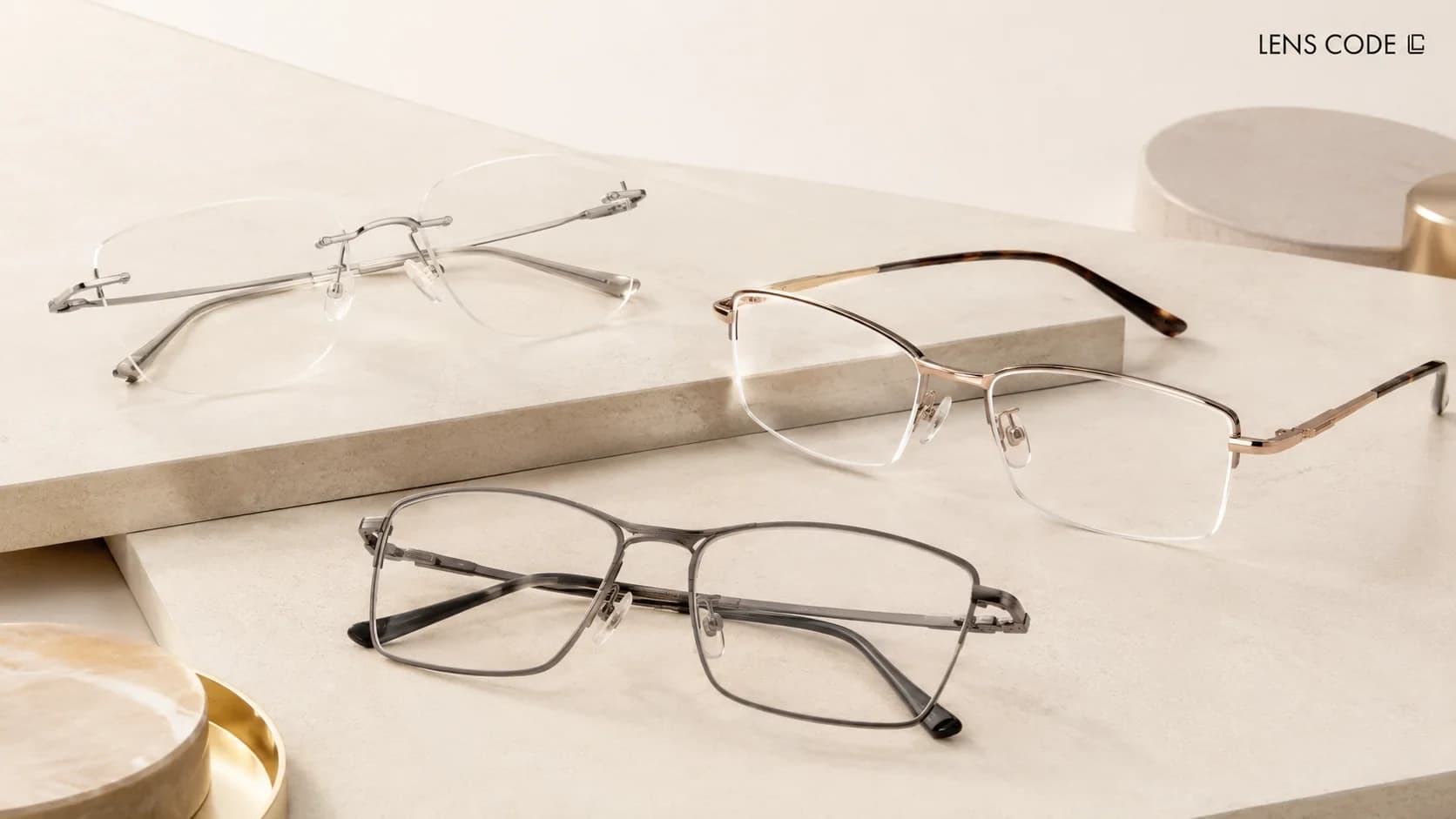
Types of Eyeglass Frames... How to Choose the Right Frame and Material
Choosing eyeglass frames is not only about finding a shape you like. Frame construction, material, fit and the way you plan to wear your glasses all affect whether a particular design makes sense for you.
Quick answer
Start by separating three decisions: frame construction, frame material and frame shape. Decide whether you prefer a full-rim, semi-rimless or rimless construction, then compare material and measurements before using shape and colour to narrow your shortlist.
What are the main types of eyeglass frames?
Eyeglass frames can be classified in three different ways: construction + material + shape. Keeping those categories separate makes comparison much easier.
Construction describes how the lenses are held by the frame, such as full-rim, semi-rimless or rimless. Material describes what the frame components are made from, such as titanium, another metal, acetate or TR90. Shape describes the visual outline, such as rectangular, round or cat-eye.
A pair of rimless glasses can therefore also be a titanium frame. “Rimless” tells you how the frame is constructed; “titanium” tells you the material. Mixing those categories is one of the easiest ways to make frame comparison confusing.
Full-rim vs semi-rimless vs rimless frames
The main difference is how much of the lens is surrounded by a rim. Full-rim frames enclose the lenses, semi-rimless designs leave part of the lens without a surrounding rim, and rimless designs attach the lenses directly to the bridge and temples.
| Frame construction | What it is | Key consideration | Best considered when |
|---|---|---|---|
| Full-rim | A rim surrounds the entire lens. | Material, rim thickness and total frame design can change both its visual presence and weight. | You prefer a clearly defined frame around the lenses. |
| Semi-rimless | Part of the lens is surrounded by a rim while another section remains open. | Check the actual mounting design and frame measurements rather than assuming all half-rim styles fit alike. | You want some visible frame structure with a lighter visual appearance. |
| Rimless | The lenses are attached directly to the bridge and temples without a surrounding rim. | Lens material, prescription and mounting compatibility need to be checked before ordering. | A minimal, low-profile appearance is one of your main priorities. |
Verified rimless example
Aura - Black is currently labelled by LensCode as a rimless titanium eyeglass frame. Its listed measurements are 51 mm lens width, 18 mm bridge width and 140 mm temple length.
Verified semi-rimless example
Eva - Rose Gold is explicitly classified as Semi Rimless. Its current specifications list 51 mm lens width, 21 mm bridge width and 145 mm temple length.
Found the construction you prefer?
Compare the available prescription frames by measurements, design and product specifications before choosing lenses.
Browse LensCode EyeglassesWhich eyeglass frame material should you choose?
There is no single best frame material for every wearer. The useful comparison is between the complete frame design, its construction, the material actually specified for that model, your preferred fit and how you intend to use it.
Do not assume the construction tells you the material. A rimless frame may use titanium or another material, while a rectangular frame may be metal, acetate or another plastic depending on the specific model.
Titanium frames
Titanium is used in engineering applications where corrosion resistance and a favourable strength-to-density relationship are useful. In eyewear, that makes titanium worth considering when frame material and overall mass matter to you, but the finished weight and comfort still depend on the complete frame and lenses.
LensCode currently identifies Aura - Black as a titanium rimless frame. That product is a useful example of why construction and material should be evaluated separately.
Technical reference: Royal Society of Chemistry — Titanium .
Plastic and acetate frames
“Plastic” is a broad material category, while acetate is a specific material used in some plastic eyewear frames. Do not assume that every thick or clear plastic-looking frame is acetate unless the product specifications say so.
If material becomes the main part of your decision, use LensCode's eyeglass frame materials guide for the deeper comparison rather than treating this frame-type guide as a complete materials reference.
TR90 when flexibility matters
TR90 appears in LensCode's current children's range. LensCode describes its Ando eyeglasses as using TR90 material and specifically describes those frames as lightweight, flexible and shatter-resistant.
That makes TR90 relevant when comparing some children's products, but there is no need to make it the centre of an adult prescription-frame decision unless the specific product you are considering uses it.
How much does frame shape matter?
Shape matters mainly as a design and fit filter after you have considered construction and measurements. LensCode's current English shopping experience includes shapes and frame-style routes such as rectangular, round, square, cat-eye, aviator, hexagonal, geometric, rimless and semi-rimless designs.
You do not need to turn this choice into a strict face-shape rule. If you want to compare round, square, rectangular and other shapes against facial features, use the dedicated LensCode face-shape guide .
Check frame fit before choosing a style
A frame construction can suit your visual preference and still be the wrong fit. Check the measurements shown on the product page before deciding.
Quick fit check
- Lens Width: the horizontal width of one lens.
- Bridge Width: the distance across the bridge area.
- Temple Length: the length of the temple arm.
If you already own a comfortable pair, use its measurements as a practical comparison point.
For the full sizing process, including how to read numbers printed inside your current glasses, see the LensCode eyeglass size guide .
Which frame type fits your priorities?
Use the following table as a decision filter, not as a universal ranking of frame types.
| Priority | What to compare first | How to use it |
|---|---|---|
| Minimal appearance | Rimless construction | Start with rimless options, then check measurements and lens compatibility. |
| Lower visual weight | Construction + frame thickness | Compare how much material surrounds the lens rather than assuming physical weight from a photo. |
| Bolder frame presence | Full-surrounding-rim designs | Compare rim thickness, colour and shape alongside fit. |
| Daily wear | Fit + construction + material | Prioritise measurements and how the complete frame sits before choosing on appearance alone. |
| A particular style | Shape + material | Narrow the construction first, then use shape and finish to reach the final shortlist. |
How to compare prescription frames at LensCode
Begin with the LensCode eyeglasses collection rather than committing to a single model immediately. This gives you a wider view of the available prescription-frame designs before you narrow the shortlist.
Once you open a product page, compare the details that affect the decision: construction or shape, listed material where available, lens width, bridge width and temple length. Prescription-ready product pages such as Aura, Eva and Luca also include a Choose Lens step.
| LensCode example | Verified distinction | Measurements |
|---|---|---|
| Aura - Black | Rimless + Titanium | 51-18-140 |
| Eva - Rose Gold | Semi Rimless | 51-21-145 |
| Luca | Rectangular metal frame | 54-17-142 |
These examples are not a ranking. They show how three different product pages expose construction, material, shape and measurement information that you can use to narrow your own shortlist.
Common mistakes when choosing eyeglass frames
Treating rimless as a material
Rimless describes construction. Titanium, metal, acetate and TR90 describe materials.
Choosing from the product photo alone
A photo does not tell you whether the bridge or temple measurements are close to a frame that already fits you.
Assuming one material is automatically best
Material needs to be considered alongside construction, total frame design, measurements and your use case.
Ignoring your lens requirements
A rimless or other specialised construction may place additional requirements on lens material or prescription compatibility. Check the available lens configuration before finalising the frame.
Letting face shape make the entire decision
Shape is a useful style filter, but measurements, comfort and lens requirements still matter.
A simple frame decision framework
If too many frames look suitable, reduce the choice one decision at a time:
Compare the frames first, then configure the lenses
Narrow your choice by construction, material and measurements, then open the product page to review its lens options.
Explore LensCode EyeglassesFrequently Asked Questions
What type of eyeglass frame is best?
There is no single best construction for everyone. Compare frame fit, construction, material, lens requirements and the appearance you prefer before choosing.
What is the difference between rimless and semi-rimless glasses?
Rimless glasses have no surrounding rim and attach the lenses directly to the bridge and temples. Semi-rimless frames surround only part of the lens.
Are titanium eyeglass frames good for daily wear?
Titanium can be worth considering when corrosion resistance and a favourable strength-to-density ratio matter, but daily-wear comfort still depends on the complete frame design, fit, measurements and lenses.
How do I know what frame size I need?
Compare lens width, bridge width and temple length with a pair that already fits you comfortably, then check the specifications of the new frame.
Can prescription lenses be fitted into rimless frames?
Many rimless frames are designed for prescription lenses, but not every lens material or prescription is suitable for every mounting system. Check the frame's lens options and confirm compatibility with an optician when needed.
Did you find this article helpful?
Share it with your friends or family interested in optical care.
فريق LensCodeVerified
A team specialized in optical sciences and eye care, dedicated to providing the latest information and advice to help you choose the perfect glasses and contact lenses.