


Do Blue Light Glasses Protect Your Eyes According to Current Evidence
If you are considering blue light glasses because you want protection from your computer screen, separate the lens property from the health claim. A lens can filter part of the blue-light spectrum without proving that it prevents screen-related eye damage.
The same distinction matters with tired eyes. Feeling dry, blurry or uncomfortable after a screen-heavy day does not tell you that blue light is the cause or that adding Blue Cut is the treatment.
The direct answer
Current evidence does not establish that blue light glasses protect the eyes from damage caused by ordinary screen use. The best available trial evidence also does not show a clear short-term advantage for computer-related eye strain compared with non-blue-light-filtering spectacle lenses. Evidence for retinal protection from these lenses is insufficient, while sleep findings remain uncertain.
What do blue light glasses actually do?
Blue-light-filtering lenses reduce transmission of selected parts of the shorter-wavelength visible-light spectrum. How much they filter and which wavelengths are affected depend on the actual lens product.
That technical function is different from proving a medical benefit. If your question is what Blue Cut means, how it differs from Anti-Reflection and which lens option to consider, use the LensCode Blue Light Glasses buying guide . This page stays with the evidence behind the protection claims.
Do blue light glasses protect your eyes from computer screens?
There is no strong clinical evidence showing that blue-light-filtering spectacles prevent eye damage from ordinary computer, tablet or phone use. Filtering some blue light is measurable lens behaviour; “protects your eyes from your screen” is a separate claim that needs clinical evidence.
Does blue light from screens damage your eyes?
Screens emit visible blue light, but discomfort during screen use should not be treated as evidence that the retina is being damaged. Cleveland Clinic's current ophthalmology guidance says evidence does not show permanent eye damage from everyday screen blue light and does not support special filters as necessary for eye health.
You can review that distinction in Cleveland Clinic's current blue-light review . Screen discomfort and structural eye damage are different questions.
Do blue light glasses reduce digital eye strain?
The strongest current review does not show a clear short-term advantage. A Cochrane systematic review evaluated 17 randomised trials involving 619 people and found that blue-light-filtering lenses may make little or no difference to short-term visual fatigue associated with computer use compared with non-filtering lenses.
The evidence also has limitations, including small studies, different lens technologies and short follow-up in many trials. The careful conclusion is not “blue light glasses can never feel different.” It is that a reliable clinical reduction in short-term computer eyestrain has not been demonstrated.
Already understand the evidence and want to compare the lens options?
Compare Blue Cut and Anti-ReflectionIf blue light is not the whole problem why do screens feel tiring?
Digital eye strain has several possible contributors. The American Optometric Association lists issues such as uncorrected vision, glare, poor lighting, unsuitable viewing distance and posture, while extended screen work can also be associated with dry-eye symptoms.
See the American Optometric Association guidance on digital eye strain for the wider clinical context.
If screen text itself is not clear, the more useful next question may be whether your prescription suits that distance. LensCode covers that separately in Computer Glasses vs Prescription Glasses . If your work moves between monitors, paperwork and several distances, use the Office Glasses article .
Do blue light glasses protect the retina?
Current spectacle-lens trials do not establish retinal or macular protection. The Cochrane review could not reach a conclusion on macular health because none of the included randomised trials measured that outcome.
This matters because “filters selected wavelengths” and “prevents retinal damage” are not interchangeable statements. The second claim requires evidence about a clinical outcome that the current trials have not established.
Can blue light glasses improve sleep?
Light exposure can influence circadian timing, but that does not automatically prove that consumer blue-light-filtering spectacles improve sleep. The sleep studies included in the major review produced inconsistent results across different populations.
Treat improved sleep as an uncertain outcome rather than a guaranteed reason to add Blue Cut to a prescription order.
Does a blue reflection prove the lens is protective?
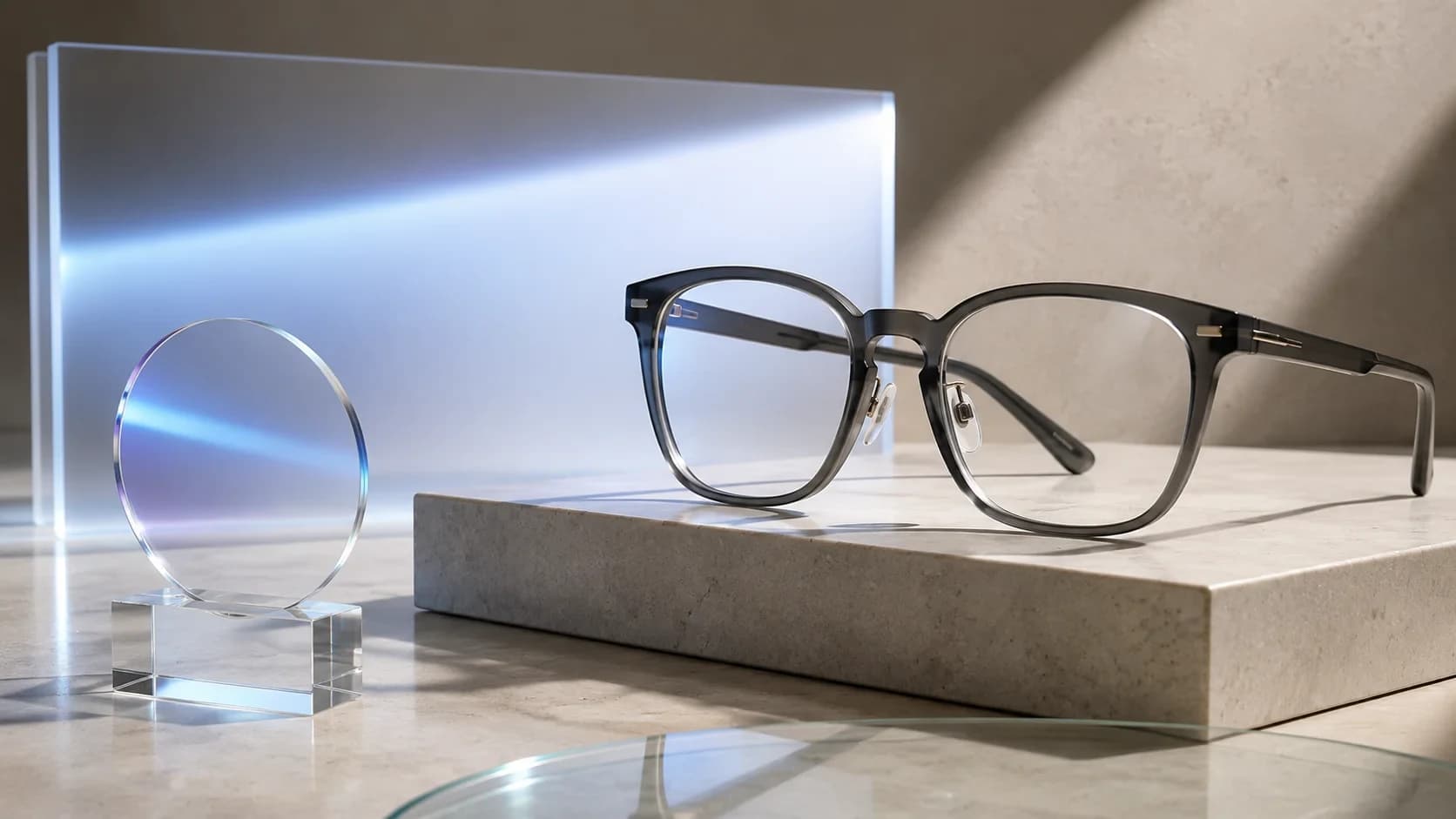
No. A blue or purple residual reflection on a lens does not tell you the filtering percentage, the spectral range or whether the lens produces a medical benefit.
Coating systems can produce visible residual colours for different optical reasons. If a filtering specification matters to you, use the published data for that lens rather than judging it from a photo or reflection colour.
Are all blue-light-filtering lenses the same?
No. Products can differ in filtering amount, wavelength range, visible tint and whether the filtering behaviour comes from the lens material, coating system or another design approach.
LensCode's current prescription-lens FAQ confirms that Blue Cut is available as an upgrade, but the public information does not publish a universal filtering percentage or wavelength range. Those figures should not be invented or borrowed from another lens.
Are Blue Cut and Anti-Reflection the same thing?
No. Blue Cut refers to blue-light filtering, while Anti-Reflection is designed primarily to reduce reflections at lens surfaces.
That distinction is enough for this evidence page. The full buying comparison belongs in the Blue Cut and Anti-Reflection guide .
When should you review the prescription instead of buying another filter?
If text has become blurry, your vision has changed or you are struggling to find a clear screen distance, do not assume Blue Cut is the first thing that needs changing.
Start with the prescription-versus-computer-glasses decision . For the broader prescription, frame and lens workflow, use LensCode's prescription glasses article .
When is the workstation more relevant than the filter?
If your vision is clear but glare, lighting, screen position or working distance is uncomfortable, those factors deserve attention before treating a spectral filter as the answer.
LensCode's office-work lens guide separates work distance and task requirements from optional lens filtering.
Does this mean choosing Blue Cut is wrong?
No. You may still prefer a lens with blue-light filtering. What changes after reviewing the evidence is the reason for choosing it: preference for a filtering feature is different from proven medical necessity.
If you still want Blue Cut after understanding those limits, continue with the dedicated Blue Light lens-selection guide rather than turning this evidence page into a shopping comparison.
What should you do before choosing Blue Cut?
- Identify what you are trying to solve: unclear vision, discomfort, reflections or a preference for blue-light filtering.
- Check the prescription when vision correction is involved.
- Do not treat screen discomfort as proof of retinal damage or a Blue Light problem.
- Review what the current clinical evidence actually supports.
- If you still want filtering, check the real lens specification rather than the marketing label alone.
- Use the online glasses buying checklist before placing the order.
If a new frame is also part of the order, keep that decision separate. Check frame measurements , frame construction and frame material independently from Blue Cut.
For customised prescription lenses, also review the current LensCode terms and current lens information before checkout.
When should you speak to an eye-care professional?
Persistent or significant pain, new or changing vision, repeated blur or symptoms that interfere with everyday tasks should not be self-diagnosed as a Blue Light problem.
If discomfort started with a new pair, LensCode also explains some of the issues worth checking in its article on eye discomfort with new glasses . Ongoing or unusual symptoms still deserve appropriate professional assessment.
Frequently asked questions about blue light eye protection
Do blue light glasses protect your eyes?
Current evidence does not establish that they prevent eye damage from ordinary digital-screen use. Filtering blue light is a lens property, not proof of clinical protection.
Can blue light glasses reduce computer eye strain?
The best available randomised-trial evidence does not show a clear meaningful short-term advantage over non-blue-light-filtering spectacle lenses.
Do blue light glasses protect the retina?
Current spectacle-lens trials do not establish retinal or macular protection from ordinary screen exposure.
Do blue light glasses help with sleep?
Sleep findings from blue-light-filtering spectacle trials are inconsistent, so improved sleep should not be treated as a guaranteed benefit.
Are computer glasses the same as blue light glasses?
No. Blue-light filtering is a lens property. Computer glasses may instead be defined by prescription, task distance or lens design.
The 60-second evidence decision
Once the evidence question is clear, move to the lens decision
Browse LensCode EyeglassesDid you find this article helpful?
Share it with your friends or family interested in optical care.
فريق LensCodeVerified
A team specialized in optical sciences and eye care, dedicated to providing the latest information and advice to help you choose the perfect glasses and contact lenses.