


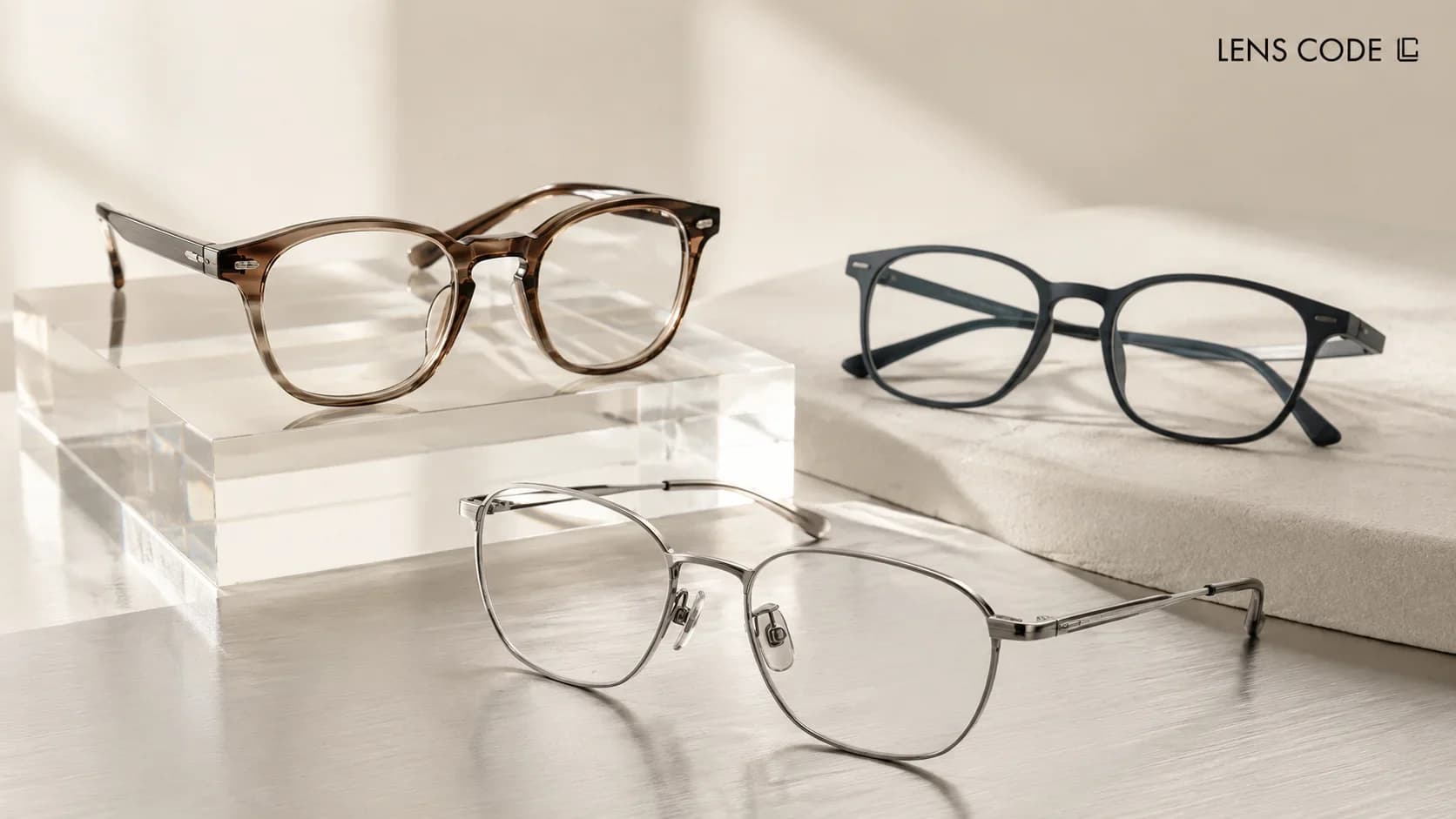
خامة إطار النظارة تفرق في الوزن والمرونة وطريقة الاستخدام
إذا كنت تقارن بين إطارين متقاربين في الشكل، لا تبدأ من اللون وحده. راجع الخامة والمقاس وطريقة بناء الإطار؛ لأن هذه التفاصيل هي التي تبدأ بملاحظتها بعد ساعات من اللبس، وليس في صورة المنتج.
Titanium وAcetate وTR90 ليست درجات جودة مرتبة من الأعلى إلى الأقل. كل خامة تعطي الإطار خصائص مختلفة، بينما السماكة والمفصلات والمقاس وطريقة التصنيع تحدد كيف ستظهر هذه الخصائص في المنتج النهائي.
التيتانيوم يستحق المقارنة إذا كنت تفضل إطارًا معدنيًا رفيعًا ويهمك انخفاض وزن المادة. الأسيتات يبرز عندما يكون اللون والتشطيب وسماكة الإطار جزءًا من اختيارك. أما TR90 فيستخدم في إطارات تستفيد من انخفاض كثافة المادة وخصائصها الميكانيكية. في الحالات الثلاث، اسم الخامة وحده لا يكفي للحكم على الإطار.
ما الذي يتغير فعلًا باختلاف خامة إطار النظارة؟
الوزن من أول الفروق التي قد تلاحظها، ثم طريقة استجابة الإطار للحركة أو الانحناء البسيط، وبعدها ملمس السطح وسماكة الحواف وإمكانات التصميم التي تسمح بها المادة.
لكن لا تقارن رقمًا واحدًا لحاله. إطار بواجهة كبيرة قد يعطي إحساسًا مختلفًا عن إطار أصغر مصنوع من الخامة نفسها. وإذا عندك نظارة مريحة حاليًا، خذ أرقامها كنقطة مقارنة مع مقاسات الإطار الجديد.
خامة الإطار ليست العامل الوحيد في الراحة والمتانة
أحيانًا تكون المشكلة في النظارة السابقة من عرض الإطار أو الجسر أو المفصلات، ثم يُنسب كل شيء إلى الخامة. اسم المادة مهم، لكنه لا يصف المنتج كاملًا.
سماكة الواجهة، طول الذراع، شكل الجسر، هندسة الإطار وجودة المفصلات كلها تغير النتيجة. لذلك إطاران من TR90 لا يلزم أن يتمتعا بالمرونة نفسها، وإطاران من التيتانيوم لا يلزم أن يكونا بالوزن نفسه.
ما الذي يميز إطارات التيتانيوم؟
إذا كنت تفضل شكل الإطار المعدني لكنك تراقب الوزن، فالتيتانيوم يستحق أن يدخل المقارنة. التيتانيوم منخفض الكثافة مقارنة بكثير من المعادن الهندسية، كما تساعد طبقة الأكسيد التي تتكون على سطحه في مقاومة التآكل، وهي خصائص موثقة لدى TIMET.
خذ نوفا روز بينك كمثال. صفحة المنتج تذكر Titanium ومقاس 55-18-138 مم وتصميمًا بدون إطار. هنا الخامة والبناء والمقاس كلها تدخل في إحساس النظارة.
وفي لونا بلاك ستجد Titanium أيضًا مع ذراع بطول 140 مم. إذا كنت محتارًا بين موديلين، راجع هذه التفاصيل بدل الاكتفاء بجملة عامة مثل «التيتانيوم خفيف».
ويمكنك مقارنة المزيد داخل مجموعة YUVA مع مراجعة مواصفات كل موديل بنفسه.
متى يكون الأسيتات خيارًا منطقيًا؟
الأسيتات ليس اسمًا لأي إطار بلاستيكي. Cellulose Acetate مادة محددة مشتقة من السليلوز، وتستخدم في صناعة صفائح تسمح بمجموعة واسعة من الألوان والشفافية والنقوش، كما توضح Mazzucchelli 1849.
إذا كان الذي شدك في الإطار هو عمق اللون أو التورتويز أو الطبقات الظاهرة في الحافة، هنا الأسيتات يعطي المصمم مساحة واضحة. أما الوزن والصلابة فلا تحكم عليهما من كلمة Acetate وحدها؛ سماكة الإطار وحجمه وطريقة تصنيعه تفرق أيضًا.
وإذا كانت صفحة المنتج تقول «بلاستيك» فقط، فلا تفترض أنها تتحدث عن الأسيتات.
ماذا يعني TR90 في إطارات النظارات؟
اسم TR90 يظهر كثيرًا في وصف الإطارات، لكنه ليس تقييم جودة ولا يعني أن الإطار غير قابل للكسر.
Grilamid TR 90 ينتمي إلى عائلة البولي أميد الشفاف المستخدمة في تطبيقات البصريات، وتعرض EMS-GRIVORY خصائص مرتبطة بانخفاض الكثافة والأداء الميكانيكي والمقاومة الكيميائية. هذه خصائص للمادة، وليست وعدًا بأن كل إطار TR90 سيعطي النتيجة نفسها.
في LensCode مثلًا، تذكر صفحة جوري خامة TR90 ومقاس 47-18-136 مم، كما تذكرها صفحة سكاي. بعد تطابق الخامة والمقاس، تبدأ مقارنة التصميم والتفاصيل الأخرى.
وإذا كانت النظارة لطفل، راجع إطارات الأطفال مع مقاس وثبات إطار الطفل؛ الخامة وحدها لا تحدد الملاءمة.
ماذا عن الإطارات المعدنية والبلاستيكية الأخرى؟
كلمتا «معدن» و«بلاستيك» تصفان فئتين واسعتين. إذا قرأت «إطار معدني» فلا تحوله تلقائيًا إلى Titanium أو Stainless Steel.
صفحة لوكا مثال واضح؛ المنتج موصوف بأنه معدني، لكن المواصفات الحالية لا تسمي سبيكة محددة. هنا نستخدم المعلومة الموجودة ولا نستنتج خامة أدق من الصورة.
Titanium أم Acetate أم TR90؟
| الخامة | ما الذي يميزها في المقارنة؟ | ما الذي لا تحكم عليه من الخامة وحدها؟ |
|---|---|---|
| Titanium | معدن منخفض الكثافة ومقاوم للتآكل، ويستخدم في تصاميم معدنية رفيعة. | الوزن النهائي والمرونة والراحة. |
| Acetate | مجال واسع للألوان والنقوش والتأثيرات داخل سماكة الإطار. | الوزن والصلابة وجودة التشطيب النهائية. |
| TR90 | بولي أميد منخفض الكثافة بخصائص ميكانيكية مناسبة لتطبيقات البصريات. | مقدار المرونة أو مقاومة الإطار النهائي للتلف. |
أي خامة تناسب أولويتك أكثر؟
- إذا كان الوزن يضايقك: ضع Titanium وTR90 ضمن المقارنة، ثم راجع أبعاد الإطار وبناءه.
- إذا كنت تبحث عن مرونة أعلى: راجع الموديل نفسه، ولا تفترض أن كل TR90 ينثني بالمقدار نفسه.
- إذا كان اللون والتشطيب مهمين: الأسيتات يستحق النظر.
- إذا كنت تفضل إطارًا معدنيًا رفيعًا: قارن موديلات Titanium مع مراعاة المقاس والبناء.
حدد أولويتك أولًا، ثم قارن الموديلات نفسها.
تصفح إطارات النظارات الطبيةهل الخامة الأغلى تعني إطارًا أفضل؟
لا. السعر يدخل فيه التصميم والعلامة والتشطيب والمكونات وطريقة التصنيع، وليس الخامة وحدها. إذا وجدت إطارًا أغلى، اسأل ماذا تغير فعلًا في المواصفات.
وعند الوصول إلى مرحلة الطلب، راجع الأسئلة الشائعة في LensCode بدل افتراض تفاصيل الخدمة من سعر المنتج.
هل خامة الإطار تؤثر في الوزن؟
نعم، لكنها لا تحدد وزن النظارة النهائي. المادة لها كثافة معينة، لكن الإطار المكتمل يحتوي على عدسات ومفصلات وأذرع وواجهة بأبعاد وسماكات مختلفة.
إذا كان الوزن سبب تغيير نظارتك الحالية، قارن عرض العدسة والجسر وطول الذراع وحجم الواجهة أيضًا.
هل خامة الإطار تؤثر في تحمل الاستخدام اليومي؟
خصائص المادة تؤثر في جوانب مثل الانحناء والتآكل والإجهاد، لكن عمر النظارة يعتمد كذلك على المفصلات والبراغي والطلاء والسماكة وطريقة التعامل معها.
لا تستخدم كلمة «مرن» كمرادف لـ«يعيش أطول». وإذا كانت سياسة الاستبدال جزءًا من قرارك، راجع الشروط والسياسات الحالية.
هل يمكن اختيار الخامة حسب الوصفة الطبية؟
لا توجد قاعدة تربط وصفة معينة بخامة واحدة. قوة الوصفة وأبعاد الإطار وبناؤه وتصميم العدسة كلها تدخل في الملاءمة.
إذا كانت الوصفة هي نقطة البداية لديك، راجع اختيار النظارة حسب وصفة النظر.
الفرق بين خامة الإطار ونوع الإطار
Titanium وAcetate وTR90 تخبرك مم صُنع الإطار. أما Full-Rim وSemi-Rimless وRimless فتصف طريقة بناء الإطار حول العدسات.
نوفا مثلًا خامتها Titanium وبناؤها بدون إطار؛ كل معلومة تجيب عن سؤال مختلف. ولتفاصيل البناء راجع أنواع إطارات النظارات.
مقارنة خامات حقيقية من منتجات LensCode
| الموديل | الخامة | المقاس | ماذا تلاحظ؟ |
|---|---|---|---|
| نوفا روز بينك | Titanium | 55-18-138 مم | الإطار بدون حواف، لذلك البناء والمقاس يدخلان في المقارنة مع الخامة. |
| جوري | TR90 | 47-18-136 مم | إطار أطفال أصغر، فلا تنسب فرق الإحساس إلى TR90 وحده. |
لو قارنت نوفا بجوري على أساس Titanium مقابل TR90 فقط فستفوت فرقًا أكبر: المقاس والفئة والبناء. ابدأ بهذه النقاط، ثم استخدم الخامة لتضييق الاختيار. وينطبق المنطق نفسه عند مقارنة موديلات YUVA.
أسئلة شائعة عن خامات إطارات النظارات
ما أفضل خامة لإطار النظارة؟
لا توجد خامة واحدة تتفوق في كل الحالات. حدد هل تهمك الخفة أو المرونة أو اللون والتشطيب، ثم قارن الموديل نفسه.
ما الفرق بين التيتانيوم والأسيتات؟
التيتانيوم معدن منخفض الكثافة ومقاوم للتآكل، بينما الأسيتات مادة بوليمرية توفر نطاقًا واسعًا من الألوان والنقوش.
ما هي خامة TR90؟
TR90 يرتبط ببولي أميد شفاف يستخدم في تطبيقات البصريات. تصميم الإطار وسماكته ومفصلاته تحدد سلوكه النهائي.
هل TR90 أفضل من الأسيتات؟
ليس كمقارنة مطلقة. راجع TR90 إذا كانت المرونة والوزن ضمن أولوياتك، والأسيتات إذا كان اللون والتشطيب أكثر أهمية.
هل كل الإطارات البلاستيكية أسيتات؟
لا. الأسيتات مادة محددة، ولا يصح افتراضها من شكل الإطار وحده.
هل خامة النظارة تؤثر في الوزن؟
نعم، لكن الوزن النهائي يتأثر أيضًا بالأبعاد والسماكة والبناء والعدسات.
أسئلة تراجعها قبل اختيار خامة الإطار
- هل الوزن هو المشكلة فعلًا في نظارتك الحالية؟
- هل تريد إطارًا رفيعًا أم حواف أكثر سماكة؟
- هل المرونة أولوية لديك؟
- هل اللون والتشطيب جزء أساسي من القرار؟
- ما مقاسات النظارة التي ترتاح معها حاليًا؟
- هل تقارن خامتين أم مقاسين وبناءين مختلفين؟
- هل صفحة المنتج تذكر الخامة بدقة؟
وإذا كنت تشتري أونلاين، راجع أيضًا أخطاء شراء النظارات عبر الإنترنت.
إذا عرفت أولويتك ومقاسك، تصبح مقارنة الخامات أقصر بكثير.
قارن إطارات النظارات الطبيةهل استفدت من هذا المقال؟
شارك المعرفة مع أصدقائك أو عائلتك المهتمين بصحة العين والنظارات.
فريق LensCodeمعتمد
فريق متخصص في علوم البصريات والعناية بالعين، يسعى لتقديم أحدث المعلومات والنصائح لمساعدتك في اختيار النظارات والعدسات اللاصقة المناسبة تماماً لاحتياجاتك.