


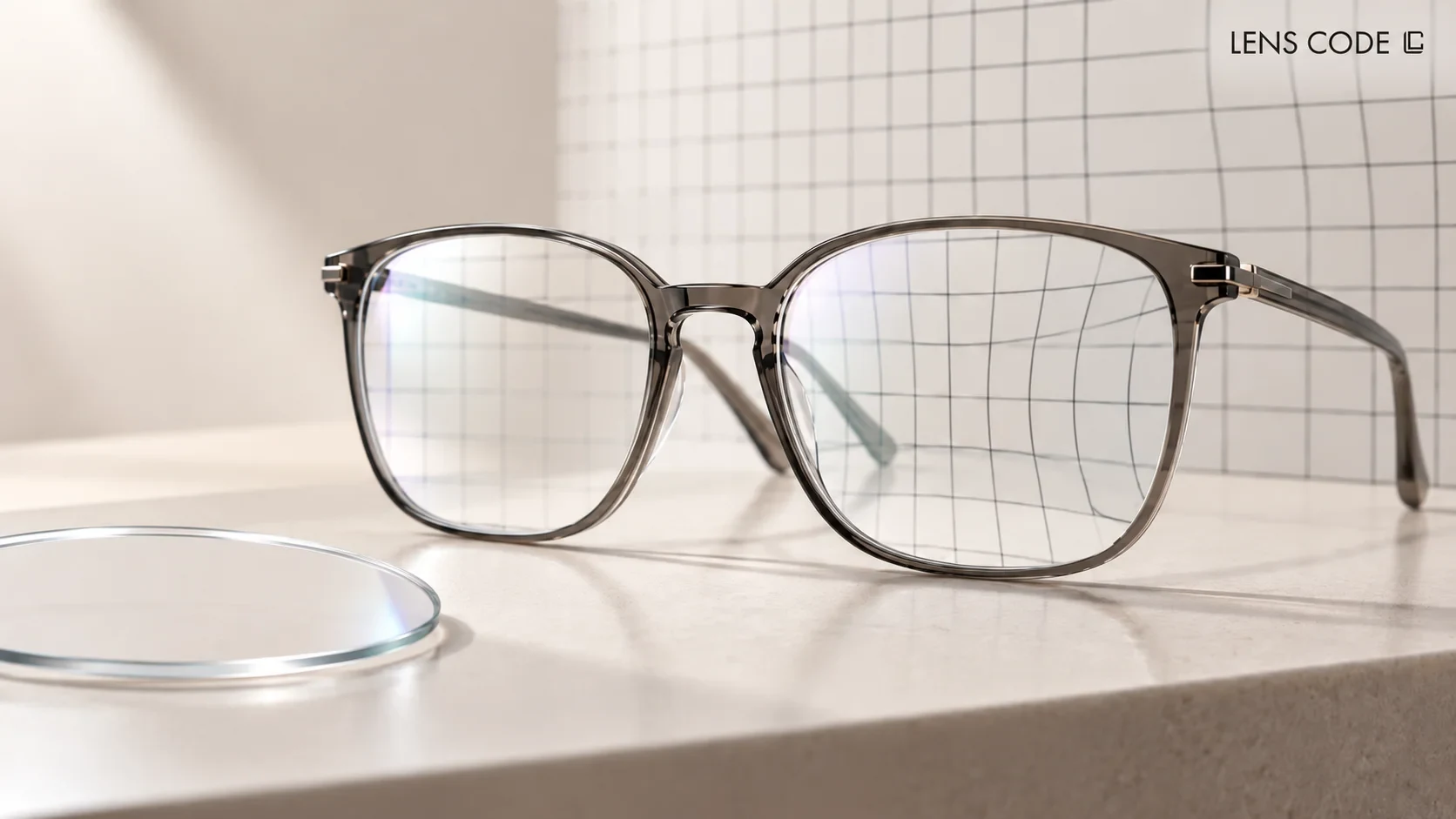
Eye Pain With New Glasses How to Tell Adaptation From a Problem
If your new glasses make vision clearer but leave you with a headache, dizziness or an unfamiliar image, do not assume immediately that the prescription is wrong. Some changes require adaptation, but strong symptoms or symptoms that fail to improve deserve a proper check of the prescription, lenses and frame.
The useful question is simple: are the symptoms getting milder, staying the same or getting worse?
Quick answer
Mild, improving eye strain, headache, temporary blur or a slight off-balance feeling can occur with some new prescriptions or lens designs. Severe, worsening or persistent symptoms — or vision that does not feel safe to use normally — should not simply be labelled adaptation.
Is eye pain with new glasses normal?
It can be, but not automatically. A pattern that fits adaptation is usually mild and improving. Severe pain, worsening headache or vision that remains functionally poor deserves a recheck rather than waiting for a fixed number of days.
Why can new glasses feel strange even when vision is sharper?
New lenses can change relative image size, the way lines appear through different parts of the lens and how distances feel, especially after a meaningful prescription change, astigmatism correction or a switch to multifocal lenses. Sharper vision does not always feel familiar immediately.
What can normal adaptation feel like?
- Mild eye strain or headache.
- Temporary blur or an unfamiliar image.
- A slight off-balance feeling.
- Minor changes in depth perception or peripheral vision.
The symptom alone does not decide whether it is normal. Intensity and improvement trend matter more.
How can you tell adaptation is improving?
Look for a trend: less headache, easier walking, more natural vision at different distances and longer periods of comfortable use. Many people improve within days, while some prescription or lens changes take longer. There is no single deadline that applies to everyone.
Do headaches mean the prescription is wrong?
No. A headache may occur during adaptation, but it can also relate to the prescription, lens position, frame pressure or screen use. For the broader relationship between vision and headaches, see Can Glasses Help Prevent Headaches?.
Why can new glasses make you dizzy or make the floor look tilted?
Changes in lens power, image size, astigmatism correction, AXIS or lens design can make distances and lines feel different. A mild effect that is improving can be monitored; strong distortion or dizziness that makes walking or normal use unsafe needs review.
What do SPH, CYL, AXIS and ADD change?
SPH is spherical lens power, CYL is the amount of astigmatism correction, AXIS is its orientation and ADD is near addition where applicable. A change in any of them can feel different, but symptoms cannot tell you whether the prescription is objectively too strong or too weak. Do not alter these values yourself.
Why are progressive lenses different?
Progressive lenses combine distance, intermediate and near zones, so prescription power is only one part of the fitting. Fitting height, frame position, lens design and appropriate measurements influence how the viewing zones line up. If those zones are not usable, “just adapt longer” is not enough.
Adaptation or a problem that needs checking?
| Pattern | What may deserve checking |
|---|---|
| Mild symptoms that are improving | Monitor adaptation. |
| Clear blur across most distances | Prescription and finished lens powers. |
| One eye is much less clear | Prescription and the corresponding lens. |
| Progressive zones are hard to use | Fitting, frame position and lens design. |
| Vision is clear but the frame hurts | Frame size and adjustment. |
If the problem is visual, start with LensCode Eyeglasses. If it is pressure or stability, use the eyeglass size guide.
Could the problem be lens fitting or PD?
Yes, which is why the right wording is “needs verification,” not “this is definitely the cause.” Finished lens powers, lens type, PD and design-specific fitting data can be checked. Some lenses need monocular PD or additional measurements; one binocular PD is not the only fitting input in every case.
Is the optical centre always supposed to sit exactly at pupil centre?
Do not use that as a universal rule. Depending on lens design, fitting may involve PD, optical-centre height, a fitting cross, fitting height and position-of-wear parameters. This is especially relevant for progressive and personalised lenses.
Can frame position change how correct lenses feel?
It can. Vertex distance, frame tilt, face-form angle, slipping or a crooked frame can change how you look through the lenses. Even with the same prescription, a different frame can change lens size, lens position and wearing geometry.
Can frame pressure feel like an optical problem?
Yes. If vision is clear but the bridge, temples or area behind the ears hurts, investigate the frame before blaming the prescription. Compare signs that glasses are too big, bridge and nose pressure and the frame size guide.
Could screen work or Blue Light be the issue?
Sometimes new glasses coincide with long screen sessions, dryness or an unsuitable working distance, which can add strain independently. See Prescription Glasses vs Computer Glasses and the Office Glasses guide. Blue Light filters and Anti-Reflection coatings do not correct an inaccurate prescription, PD or fitting height; keep that decision in the Blue Light guide.
Should you switch back to old glasses or wear the new pair all day?
Constant switching can make adaptation harder to judge, and regular use can help when symptoms are mild and vision is safe. But do not force continued wear through significant dizziness or clear distortion. For the separate all-day question, see Can You Wear Glasses All Day?
Should you drive if new glasses make you dizzy or blurry?
No. Do not drive when dizziness, blur or distortion makes your visual function unsafe. Safety matters more than trying to force adaptation.
When should the glasses be professionally rechecked?
Arrange a recheck if symptoms are not improving, are getting worse, vision remains functionally poor, one eye is unusually unclear, strong distortion persists or progressive zones are difficult to use. Ask for verification of the prescription, finished lens powers, relevant measurements, frame position and lens design.
When is eye pain not just a glasses-adjustment problem?
Severe eye pain, marked redness, light sensitivity or a significant or sudden change in vision should not automatically be blamed on new glasses. These symptoms deserve appropriate medical assessment rather than waiting for adaptation.
What should you bring to a recheck?
- Your new and previous glasses.
- Your current prescription if available.
- When symptoms start and which distance causes trouble.
- Whether one eye or both feel unclear.
- Whether the frame presses, slips or sits crooked.
If the glasses were ordered online, review common online glasses buying mistakes and bring the order details. You can also check the LensCode FAQ and prescription and lens terms.
What should you not do?
Do not change prescription values yourself, bend the frame randomly, keep driving with obvious blur, or buy a lens filter instead of checking the actual cause.
The 60-second decision
Mild symptoms and clearly improving? Monitor adaptation.
Not improving or worsening and vision itself feels wrong? Recheck prescription and lens fitting.
Vision is clear but the frame presses or slips? Check size and adjustment.
Progressive zones are not usable? Review fitting, frame position and lens design.
Dizziness or distortion makes normal use unsafe? Stop the unsafe activity and arrange a review.
Severe pain, redness or significant vision change? Seek appropriate medical assessment.
Frequently asked questions
How long does it take to adjust to new glasses?
Many people improve within days, while some prescriptions or progressive lenses take longer. Use improvement rather than a fixed deadline as the practical signal.
How do I know if my new glasses are not right?
Persistent blur, distortion, lack of improvement or functionally poor vision are reasonable reasons to have the glasses professionally rechecked.
Can an AXIS change feel different?
Yes, astigmatism correction can make the image feel different, but an AXIS change does not automatically mean dizziness or that the value is wrong.
Can incorrect PD cause a problem?
Centration is part of lens fitting, but you cannot calculate the correct PD from headache or dizziness. It should be verified as a measurement.
Can progressive lenses make you dizzy?
Some wearers notice an unfamiliar spatial effect, but persistent dizziness or difficulty using the viewing zones deserves a fitting and lens-design review.
Once prescription and lens fitting have been checked, compare LensCode Eyeglasses using the frame types guide and size guide.
Did you find this article helpful?
Share it with your friends or family interested in optical care.
فريق LensCodeVerified
A team specialized in optical sciences and eye care, dedicated to providing the latest information and advice to help you choose the perfect glasses and contact lenses.