


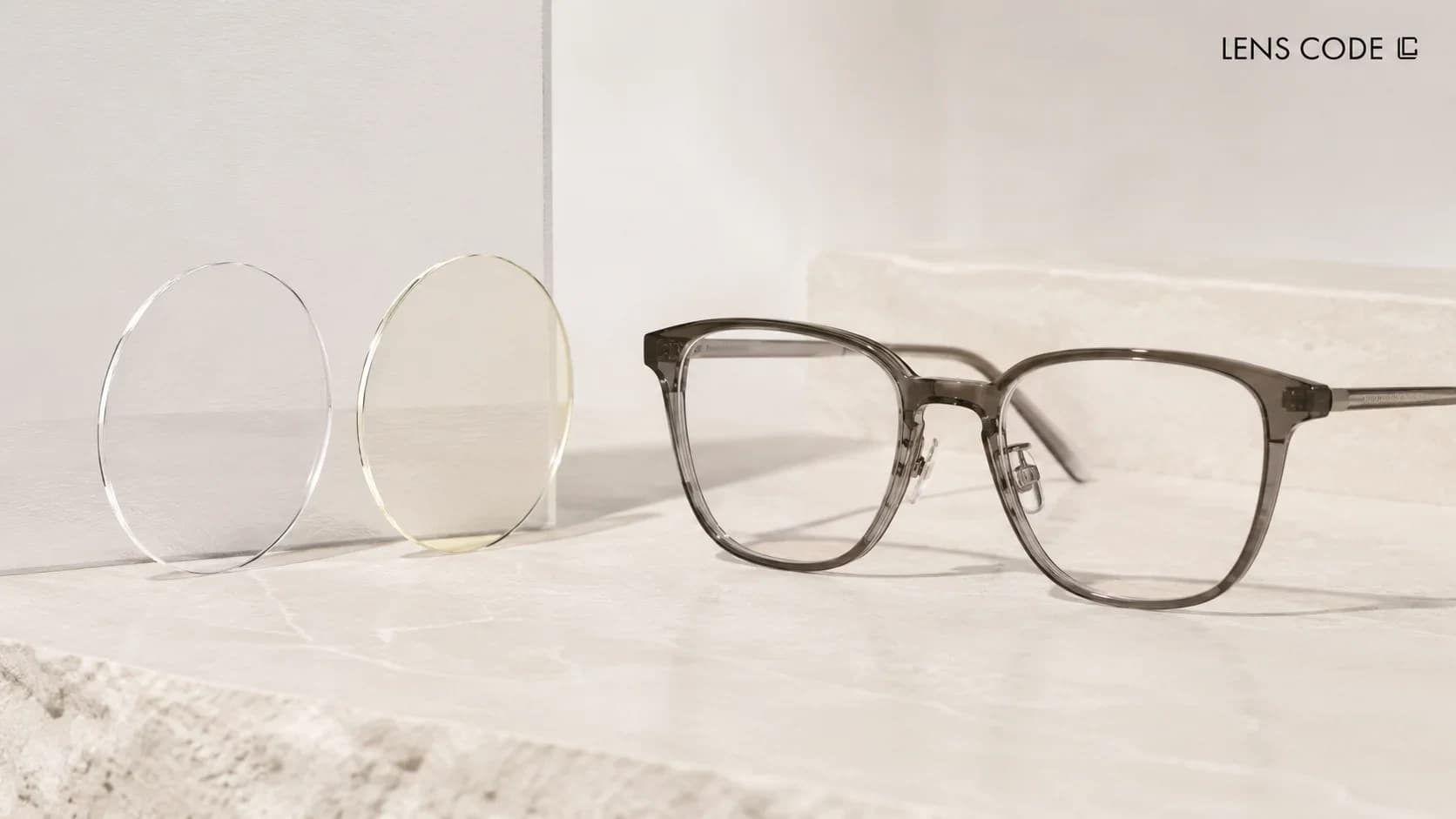
Why Eyeglass Lenses Turn Yellow and What the Colour Change Can Mean
If your eyeglass lenses were clear when you bought them and now have a yellow cast, stronger cleaning is not automatically the answer. The colour may be on the surface, developing within the lens or coating, or it may have been part of the lens design from the beginning.
Before I call a lens permanently yellowed, I would clean it correctly and check where the colour appears. A fixed tint seen through the lens is a different clue from a coloured reflection that changes when you tilt it under a light.
Quick answer
Eyeglass lenses can look yellow because of removable surface residue, changes in some lens materials after ageing or environmental exposure, deterioration of an optical coating, or an intentional tint or filter. Cleaning may fix the first problem. It does not normally reverse permanent material change or coating damage.
Four different problems can look like lens yellowing
Surface contamination
Skin oils, cosmetics, smoke residue or leftover cleaner can make an otherwise clear lens look duller or warmer.
Material discoloration
Some plastic ophthalmic materials can change optically after ageing or environmental exposure. Surface cleaning will not remove a colour change within the material.
Coating deterioration
Damaged optical layers may show as haze, patchiness, unusual colour effects or fine surface crazing rather than a uniform yellow tint.
An intentional tint or filter
Some lens filters, tints and coating systems have visible colour by design. A warm tint present from day one has a different history from a clear lens that changed later.
Is the yellow colour on the surface or inside the lens?
Clean the lenses using a method intended for coated ophthalmic lenses before deciding that the material has changed. A clean microfiber cloth and a compatible optical-care method are better first steps than a stronger household chemical. Check the LensCode FAQ if you need current lens or order information.
What happened after cleaning?
The colour improved: surface residue was contributing.
The colour stayed fixed: stop treating it like stubborn dirt.
The colour changes with lens angle: check whether you are seeing coating reflection.
Can sunlight and Gulf heat change spectacle lenses?
Some plastic ophthalmic materials can undergo optical changes after environmental and ultraviolet exposure. That does not mean every plastic lens will yellow or that one material always deteriorates faster than another. Formulation, coatings, manufacturing and actual exposure all matter.
A parked car is not normal lens storage
High temperatures inside a parked vehicle can damage some spectacle lenses and coatings. The result may be haze, crazing or other surface deterioration rather than yellowing specifically, so do not use heat exposure as a one-cause diagnosis.
Anti-Reflection colour is not the same as lens yellowing
Anti-Reflection coatings can have a green, blue, violet or other subtle residual reflection depending on their design. That is different from a yellow cast you see while looking through the lens.
Coating reflection
Often changes as you tilt the lens or move the light source. It does not prove that the base lens material has yellowed.
Through-lens yellow cast
May remain visible against a neutral white surface. This is a useful clue, not a definitive diagnosis of the coating or material.
For the purchasing distinction between Blue Cut and Anti-Reflection, use the LensCode Blue Light Glasses guide.
Can blue-light filtering lenses have a warm tint?
They can, depending on the filtering technology. Other systems remain visually clearer, so “Blue Cut” should never be used as shorthand for “yellow lens”.
If the warm colour was present when the lenses were new, check the original specification before calling it deterioration. Use the Blue Cut buying guide for the lens-feature decision and the Blue Light evidence article for health and protection claims.
Do not try to bleach or polish the lenses
Reasonable first step
- ✓ Use a clean microfiber cloth.
- ✓ Use care methods compatible with coated ophthalmic lenses.
- ✓ Check the colour again against neutral lighting.
Avoid this
- ✕ Toothpaste or abrasive polishing.
- ✕ Bleach or acetone.
- ✕ Unverified household glass cleaners.
- ✕ Hard repeated rubbing to remove fixed colour.
“Alcohol damages every coated lens” is also too broad. Purpose-designed optical cleaners use different formulations. The useful rule is compatibility with the actual ophthalmic lens and coating, not a blanket assumption about one ingredient.
Yellowing and fogging are different problems
| What you notice | Temporary fog | Persistent yellowing |
|---|---|---|
| Appears with temperature or humidity changes | Common | Not required |
| Clears after conditions stabilise | Usually | Usually not |
| Remains as a fixed colour | Unusual | Worth inspecting |
If the lenses turn cloudy and then clear again, use the separate article on why glasses fog up before treating the problem as permanent discoloration.
When should the lenses be inspected or replaced?
The tint remains after suitable cleaning.
The optical surface no longer looks uniform.
Visible surface deterioration is present.
The condition is now noticeable while wearing the glasses.
Many ophthalmic coatings are factory-applied, so household polishing does not rebuild them. If replacement becomes relevant, use the LensCode prescription-glasses guide rather than applying a fixed two- or three-year replacement rule.
What should you check if you need new lenses or glasses?
If the frame is changing too, start with the LensCode Eyeglasses collection, then keep prescription, lens type and optional coatings as separate decisions. The prescription-glasses workflow covers the lens decision, while the online glasses checklist helps with final order review.
If you also need a new frame, compare frame measurements, frame materials and frame construction as separate shopping decisions.
For screen or office use, keep lens coatings separate from working-distance needs. Use Computer Glasses vs Prescription Glasses and the office-glasses workflow when those are the actual questions.
The problem is no longer removable residue?
Review the prescription and lens requirement first, then choose a new frame if the whole pair needs replacing.
Compare LensCode EyeglassesFrequently asked questions about yellow eyeglass lenses
Can yellow eyeglass lenses be cleaned?
Yes when removable residue is causing the colour. Cleaning does not normally reverse permanent material change or damaged coating.
Can heat turn lenses yellow?
Excessive heat can damage some spectacle lenses and coatings, but yellowing is not the only possible result and is not guaranteed.
Do Blue Cut lenses have to look yellow?
No. Appearance depends on the filtering technology, and some systems can have only a slight warm tint.
Does coloured Anti-Reflection mean coating damage?
No. Residual coloured reflection can be normal. Patchiness, haze and visible surface deterioration are different observations.
How is yellowing different from fogging?
Fog is usually temporary condensation. Persistent colour behaves differently. See why glasses fog up.
A 60-second yellow-lens check
1. Was the colour present when the lenses were new? → Review the tint, filter or coating specification.
2. Did it appear later? → Clean the lens with a compatible optical-care method.
3. Did it disappear? → Surface contamination was involved.
4. Does it appear only at certain angles? → Check coating reflection.
5. Does a fixed yellow cast remain through the lens? → Have the material or coating inspected.
6. Are haze, scratches or crazing visible? → Stop trying stronger cleaners and have the lenses checked.
Before ordering customised replacement lenses, review the current LensCode terms and current lens information.
Did you find this article helpful?
Share it with your friends or family interested in optical care.
فريق LensCodeVerified
A team specialized in optical sciences and eye care, dedicated to providing the latest information and advice to help you choose the perfect glasses and contact lenses.